Golem · Fossil, what to know.
About the Golem card
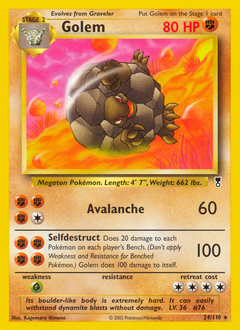
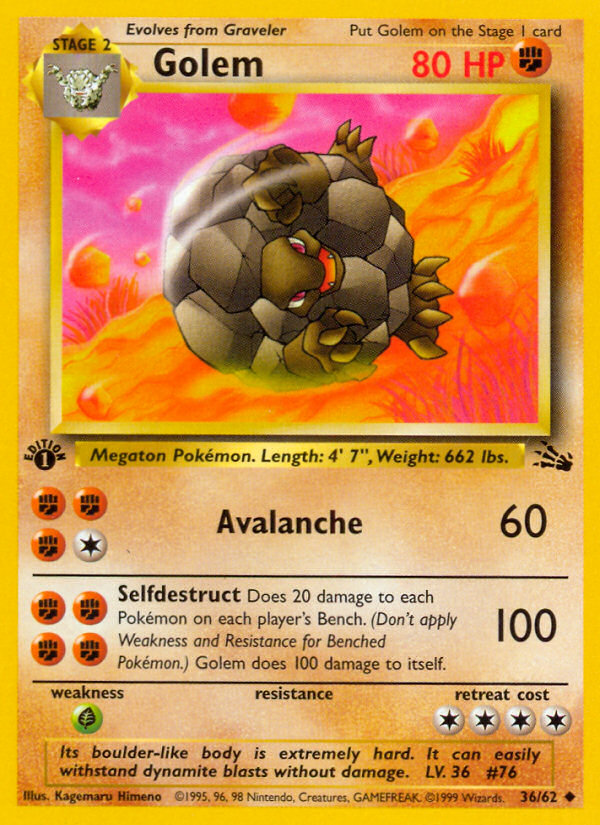
Golem is card 36 of 62 in Fossil, released in October 1999, an Uncommon. It is a Stage 2 Fighting-type with 80 HP.
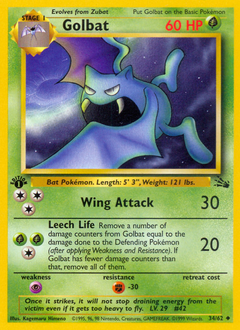
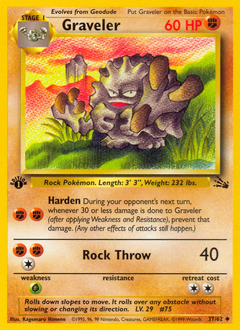
As a Stage 2, it evolves from Graveler, which places Golem deeper in its line and means most collectors hold it alongside the cards it evolves from.
Illustrated by Kagemaru Himeno. Himeno is one of the most-recognized vintage illustrators, with a softer, more textured style that shows up across the Jungle and Neo runs.
The Pokédex entry printed on Golem reads: "Its boulder-like body is extremely hard. It can easily withstand dynamite blasts without damage."
About Golem in the Pokémon world
The fully evolved Geodude line via trade. Heavy boulder silhouette. Fossil Rare Golem with steady set-completion demand.
What is Golem worth?
Golem is an Uncommon, so raw copies are inexpensive and easy to find. The value is in condition: a genuine PSA 10, especially 1st Edition, can still reach a surprising figure for an otherwise common card. The live price above breaks it down by grade.
Print variants and how to spot them
Fossil shipped in 1st Edition and Unlimited, with no Shadowless print. The Edition 1 stamp under the artwork separates the scarcer 1st Edition Golem from the Unlimited copy.
Grading and condition
Golem grades forgivingly, but the same centering and edge standards apply. Pack-fresh raw copies are easy to find, which makes a clean PSA 10 submission a low-cost way to learn how the cardstock behaves under grading.
If you are collecting Golem
Raw copies of Golem are inexpensive enough that grading rarely pays unless you have a clearly pack-fresh example. For set completion, a clean sleeved Golem is the practical move.
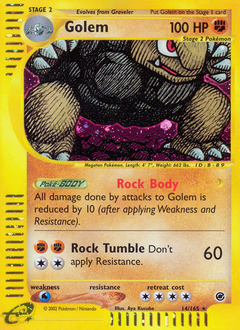
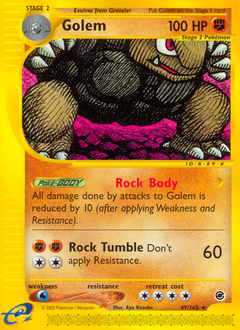
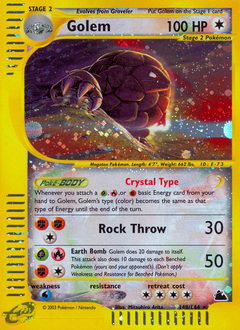
Three prints, three markets.
Edition 1 stamp under the artwork. Trades above Unlimited in matching grade.
No stamp. The standard, more affordable print.