
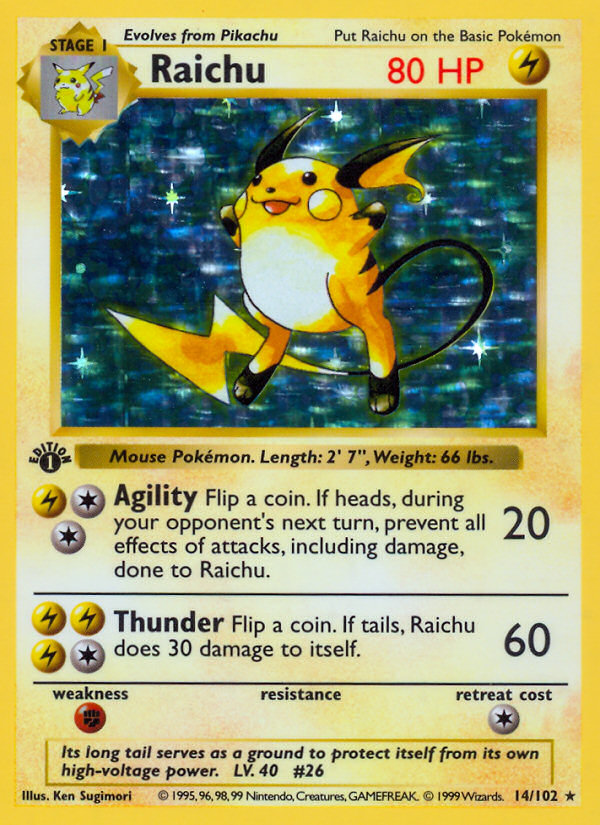
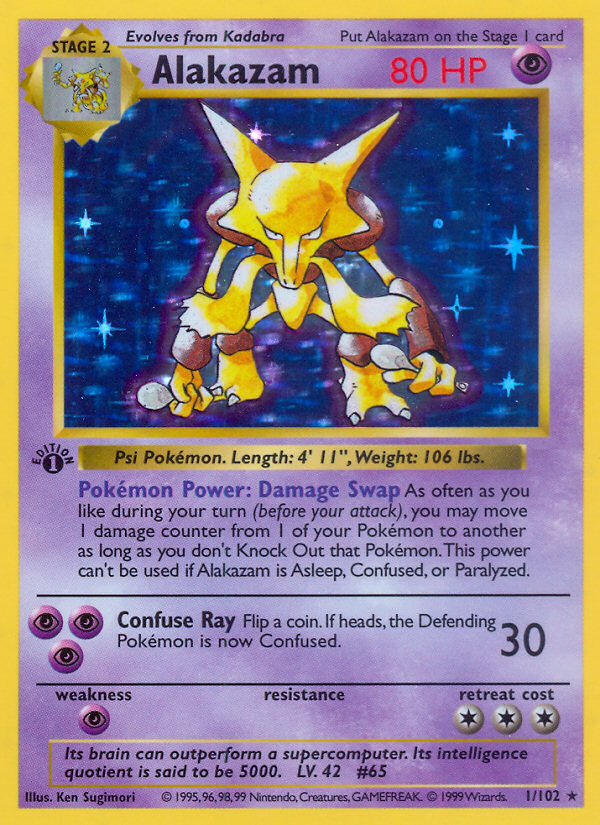
Most printing flaws are worth nothing. Value lives in scarce, factory-verified errors: severe miscuts that show the next card, missing-ink cards, and famous named errors like the Jungle No Symbol print. Cosmetic stuff, holo bleed and mild off-centering, adds nothing. No comps means no real price, and the slab label is your proof.
- Most printing flaws add nothing; value lives in scarce, factory-verified errors.
- A severe miscut that shows the next card sells; a few millimeters of border slop does not.
- Named errors like the Jungle No Symbol print trade at real premiums across a set.
- Holo bleed and mild off-centering are cosmetic, not collectible.
- Without sold comps, any one-off error price is a guess. The slab label is your proof.
The five categories collectors recognize
Errors fall into a handful of buckets, and only some of them carry a premium. Here is the field guide, with whether each one actually moves money.
| Error type | What it is | Collectible? |
|---|---|---|
| Miscut | Blade drifted, adjacent card or margin shows | Yes if severe, no if mild |
| Missing color / ink | A plate failed, a color layer is absent | Yes if factory-verified |
| Stamp misalignment | 1st Ed stamp off-center, doubled, or inverted | Sometimes, case by case |
| Holo bleed / ghost holo | Foil runs past the art window | No, cosmetic |
| Wrong-position reverse holo | Reverse finish on a standard slot | Small premium when graded |
Miscut
The cutting blade drifted, leaving a sliver of an adjacent card or the outer sheet margin on the card. Severe miscuts, where you can clearly see the neighboring artwork, trade at real premiums. Mild ones, a few millimeters of border imbalance, do not.
Missing color or missing ink
A printing plate failed mid-run and dropped a color layer. A Charizard with no orange, a holo with no foil, an HP label with the digit missing. These are scarce and command premiums when authentic, but they have to be provably from the factory rather than from wear or a chemical accident.
Stamp misalignment (1st Edition era)
The 1st Edition stamp landed in the wrong place under the art. Off-center stamps, double stamps, and inverted stamps all exist. The no-stamp version of an otherwise 1st Edition card is famously valuable on a few cards, the Jungle No Symbol error chief among them.
Holo bleed and ghost holo
Foil that runs past the art window, or a faint ghost of the holo pattern bleeding into non-holo areas. These are cosmetic, not scarce, and they will not lift the price of a common card in any meaningful way.
Reverse holo in the wrong position
A reverse-holo finish applied to a slot that should have been a standard print. Modern booster boxes throw these off now and then. They trade at small premiums in graded condition.
The famous ones
The No Symbol Jungle error. The first Jungle print shipped without the set symbol in the lower-right corner of every card; Wizards added it on the next print. Both are 1st Edition, and the No Symbol cards trade at a meaningful premium across the set.
The "Edition 1" misprint on Neo Discovery. A small batch printed with the stamp inside the artwork window instead of below it. These trade in the four figures for marquee cards.
The Charizard ghost holo. A small Base Set Unlimited run produced cards where the holo pattern bled lightly across the artwork. Some buyers call these defects; others call them genuine errors and pay for them.
How to value an error
There is no blanket error premium. Each famous error trades on its own population and demand. For a one-off miscut or missing-color card, you are pricing a 1-of-1 oddity, which means the value is whatever the next buyer will pay.
Common questions
- Are miscut Pokemon cards worth money?
- Only when the miscut is severe. A card showing a clear strip of the neighboring card can trade at a real premium, especially graded. A few millimeters of uneven border is just off-centering and adds nothing to the price.
- What is the Jungle No Symbol error?
- The first print of Jungle shipped without the set symbol in the lower-right corner of every card. Wizards corrected it on the next print run. Both versions are 1st Edition, and the No Symbol cards trade at a meaningful premium across the whole set.
- How do I know an error is real and not damage?
- A genuine factory error is consistent with the printing process: a clean missing ink layer, a blade-straight miscut, a misplaced stamp. Wear, chemical spills, and home alterations are not errors. The surest confirmation is a PSA or CGC slab that labels the error.
- How do I price a one-of-a-kind error?
- Look for sold comps of the exact same error on eBay, TCGplayer, and auction archives. With no comps, the card is worth whatever the next buyer pays, so anchor low. There is no general percentage premium that applies to every error.