
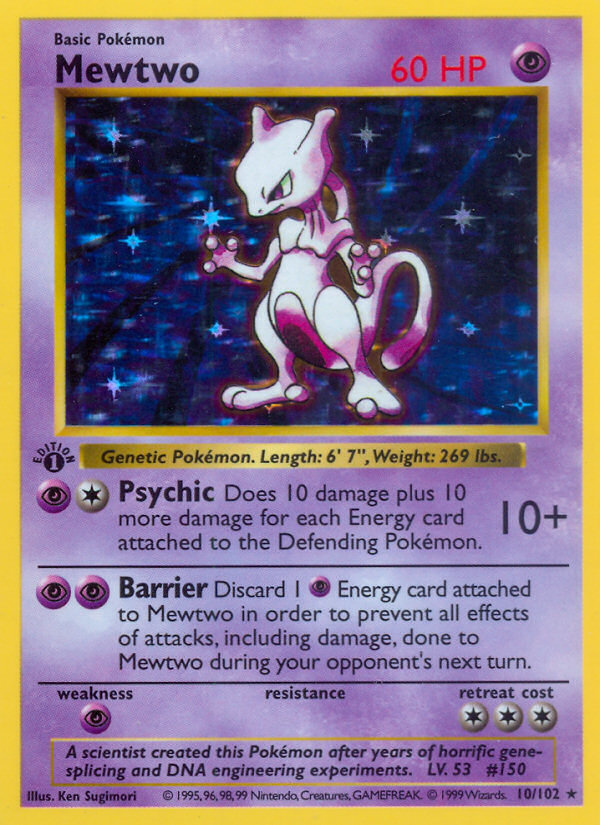
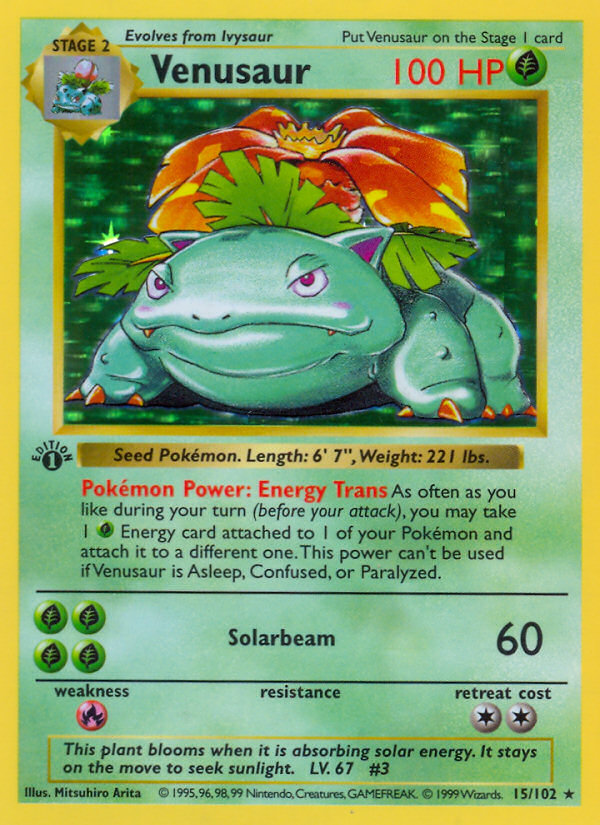
Cosmos is the 1999 to 2002 Wizards holo, a starfield behind the art. Reverse holo foils everything except the art. Galaxy is the Shiny Vault swirl. Rainbow, gold, and alternate art are the modern chase tiers. Pattern tracks scarcity: regular, reverse, holo, full art, alt art, rainbow, gold, from cheapest to dearest.
- Cosmos is the 1999 to 2002 Wizards starfield holo, used on every holo rare from Base Set to Skyridge.
- Reverse holo foils the whole card except the art, and grades harshly because scratches show.
- Galaxy holo marks the Shiny Vault subset; it is separate from the main set and priced on its own.
- Rainbow, gold, and alternate art are the modern chase tiers, each well above a standard holo.
- For one card, value climbs: regular, reverse, holo, full art, alt art, rainbow, gold.
How to read the pattern at a glance
Foil pattern tells you two things at once: the era a card was printed and how scarce its finish is. Run your eye down this table and you can place almost any holo without flipping it over.
| Foil pattern | Era | The tell | Where value sits |
|---|---|---|---|
| Cosmos holo | 1999 to 2002 (Wizards) | Starfield of white dots behind the art | Highest on Base 1st Edition holos |
| Reverse holo | 2002 on (Legendary Collection) | Whole card foiled, artwork stays matte | Between base print and holo rare |
| Cracked ice / swirl | Sun and Moon onward | Modern parallel foil, refreshed each block | Everyday parallel-set value |
| Galaxy holo | Hidden Fates to Crown Zenith | Swirling galaxy on Shiny Vault cards | Separate-subset premium |
| Rainbow rare | Modern chase | Rainbow gradient over the full card | Well above a standard holo |
| Gold rare | Modern chase | Gold foil across the card | Top modern rarity tier |
| Alternate art | Modern chase | Full-bleed art, no standard frame | Often the box chase |
Cosmos holo: the Wizards original
The first Wizards holo pattern. A field of small white star-like dots scattered across a black background, with the artwork laid on top. It ran on every holo rare from Base Set through Skyridge, uniform across sets; only the shape of the art window changed. Cosmos holos from Base Set 1st Edition still command the largest holo premium in the hobby.
Reverse holo: the parallel set
Legendary Collection introduced the reverse holo in 2002. The whole card surface outside the artwork is foiled while the art itself stays matte. Most modern sets carry it forward as a full parallel set: every common, uncommon, and rare gets a reverse version that sits between the standard print and the holo rare in scarcity.
Reverse holos punish graders. The foil shows fingerprints, holo scratches, and edge whitening at much higher contrast than a standard print, so a PSA 10 reverse holo of even a vintage common is genuinely hard to find.
Modern foil patterns (Sun and Moon onward)
Cracked ice and swirl
The everyday modern parallel-set foil, refreshed each block. Sword and Shield used a vertical-stripe pattern; Scarlet and Violet uses a wave. These are what fills most modern booster boxes.
Celebrations Classic Collection (2021)
The Classic Collection reprints classic cards, Base Set holos among them, with a modern holofoil and a 25th anniversary stamp rather than the original 1999 cosmos. The mix of vintage art and contemporary foil makes the subset easy to spot in a binder.
Galaxy holo (Hidden Fates, Shining Fates, Crown Zenith)
A swirling galaxy finish used only on Shiny Vault and special-subset cards. These are not part of the main set; they are a separate numbered subset, SV01 to SV122 in Shining Fates, with their own collector premium.
Rainbow, gold, and alternate art
The modern chase tiers. Rainbow rare lays a rainbow gradient over the full card. Gold rare uses a gold foil. Alternate art drops the standard frame for full-bleed artwork. Each is markedly rarer than the standard holo and prices to match.
How foil pattern moves price
For a single card, the order from cheapest to dearest runs regular print, reverse holo, holo rare, full art, alternate art, rainbow, gold. Population scarcity and visual appeal both drive it. In a modern set, a chase alternate art Pikachu can trade for 50x what the standard print does, even though both came out of the same boxes.
Common questions
- What is the difference between a holo and a reverse holo?
- A standard holo foils only the artwork window; the rest of the card is matte. A reverse holo does the opposite, foiling the whole card except the art. Reverse holos appear as a parallel set in most modern releases, so nearly every card has one.
- Which Pokemon foil pattern is the most valuable?
- Pattern alone does not set value; scarcity does. Among modern finishes, gold and rainbow rares sit at the top, with alternate arts often the true box chase. Among vintage, Base Set 1st Edition cosmos holos carry the largest premium of any classic foil.
- What is a galaxy holo?
- Galaxy holo is the swirling foil used on Shiny Vault cards in Hidden Fates, Shining Fates, and Crown Zenith. These are a separate numbered subset rather than part of the main set, which is why they carry their own collector premium.
- Is holo bleed a defect that lowers value?
- No. Holo bleed, where the foil dots run slightly past the art window, is a normal printing artifact. Some collectors actually prefer it because it helps confirm the foil is factory-original rather than a reapplied fake.